

Modelling in practice is a new series at DHI that explores how modelling helps us interpret complex water environments and turn scientific insights into practical decisions.
In this conversation, Hydroacoustic Expert Matthias Ram explains what underwater noise modelling involves, where it matters most in real‑life projects and how results guide permits, construction planning and mitigation at sea.
Q: Let’s start with the basics. What is underwater noise and why do we model it?
Underwater noise is unwanted underwater sound that is typically generated as a byproduct of human activities — and it travels much farther than most people expect. In fact, sound from a single noise source can affect marine life tens or even hundreds of kilometres away.
Even technically useful sounds, such as sonar pulses or sound from seismic sources, can be considered noise from an ecological perspective. We are dealing with a whole range of different anthropogenic, i.e., human-caused, noise sources: ship traffic, pile driving, drilling, dredging, munitions clearance, seismic surveys and much more. Sound propagates very well in water, meaning that emitted noise can be detected even at considerable distances.
At the same time, many marine animals — such as fish, whales and seals — rely on sound for communication or orientation and are therefore highly sensitive to noise. Noise can have various effects on these animals, ranging from the masking of biologically relevant signals to behavioural reactions such as freezing or flight, to temporary or permanent injuries and in the most extreme cases, even death. We model underwater noise to assess the risks of these effects and thereby enable safe, sustainable and environmentally sound developments.
Q: When you begin a noise assessment, what are the essential pieces of information you need to figure out before any modelling can happen?
We usually start with four key questions: what, where, when and which?
What may sound like the key questions in a criminal investigation guide our assessment: What is the source of the sound? Is it pile driving or a moving ship – and what specific characteristics define the sound emitted?
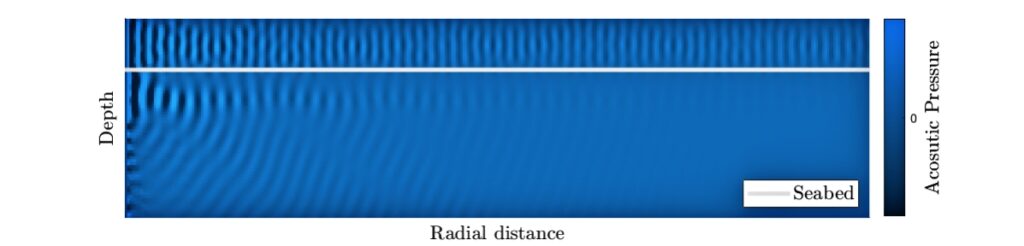
Where does it occur, i.e., how deep is the water, what is the bathymetry like and what are the characteristics of the water and the seabed?
When – more precisely, during which season – a sound is emitted often has far greater implications than a layperson might expect, since the season can strongly influence the stratification of the water and thus the refraction of sound within the water column.
And finally: Which animals can be expected in the region and how sensitive are they to sound?
Q: How do you turn model results into real-world decisions? For example, how do the outputs influence permits, schedules, construction methods or mitigation measures at sea?
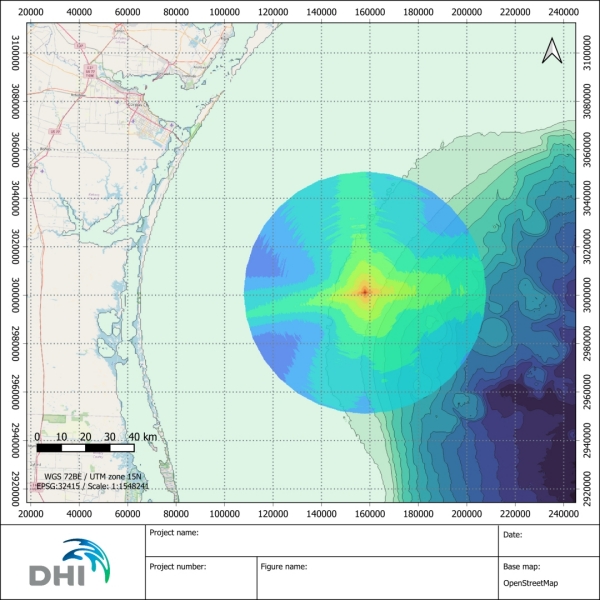
The extent of our work varies: Sometimes we deliver inputs to subsequent models, sometimes we quantify certain risks and sometimes we take the complete environmental context into account and deliver entire chapters of an environmental impact assessment. However, we do not directly take decisions, but we inform stakeholders such as developers, regulators or NGOs and suggest mitigation measures. In consequence, our results are often translated into real-world decisions e.g. a wind farm developer may choose a certain combination of mitigation measures such as bubble curtain and close-range systems based on our results or a regulator may define exclusion zones or exempt certain seasons from a permit.
Q: What’s one thing you wish people knew about underwater noise modelling?
There are many uncertainties and simplifying assumptions in the models and their inputs but if done right, it works astonishingly and one cannot overemphasise what an enormous achievement of many researchers from various disciplines that is. Our work combines knowledge and skills from engineering, maths, oceanography, biology and other adjacent fields – it is what makes the work super exciting and diverse; however, it sometimes makes the interpretation of results more challenging.
Q: Looking ahead, what developments or challenges do you think will shape underwater noise modelling in the next few years?
As an engineer and acoustician, I always see potential for the improvement of computational methods regarding speed and accuracy or how we can model new sources – and I would be surprised if the field would not be augmented by machine learning in the next few years at all. However, I have a feeling that the groundbreaking improvements will lie in how we model the interaction between the sound field and the receiver.
Currently, regulations are often formulated in black-and-white categories, such as static thresholds for certain effects or the qualitative distinction between impulsive and non-impulsive sound, but we know that in reality there are many shades of grey in between. Furthermore, it appears that individual anthropogenic pressures such as noise, chemical pollution or light pollution should not be considered in isolation on a larger scale, but rather that their cumulative effects must be assessed. We still have a long way to go before we see this type of assessment on a regular basis, but at DHI we are continuously developing our tools to be prepared for these tasks.