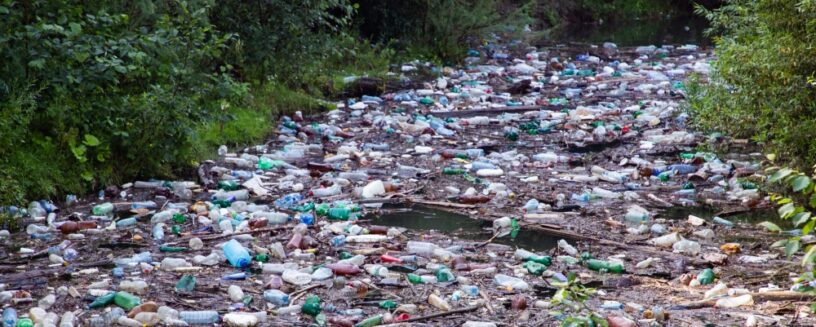



When tackling plastic pollution in rivers, one question that really matters is: ‘When is the plastic actually moving downstream to the ocean?’
It may seem like a simple question, but the answer has implications for how we monitor rivers, plan clean-up operations and invest in pollution prevention.
A recent study, ‘Three rivers to the test: Lessons for global plastic transport modelling’, published in Environmental Pollution, is the result of DHI’s collaboration with The Ocean Cleanup to better understand how plastics move through river systems.
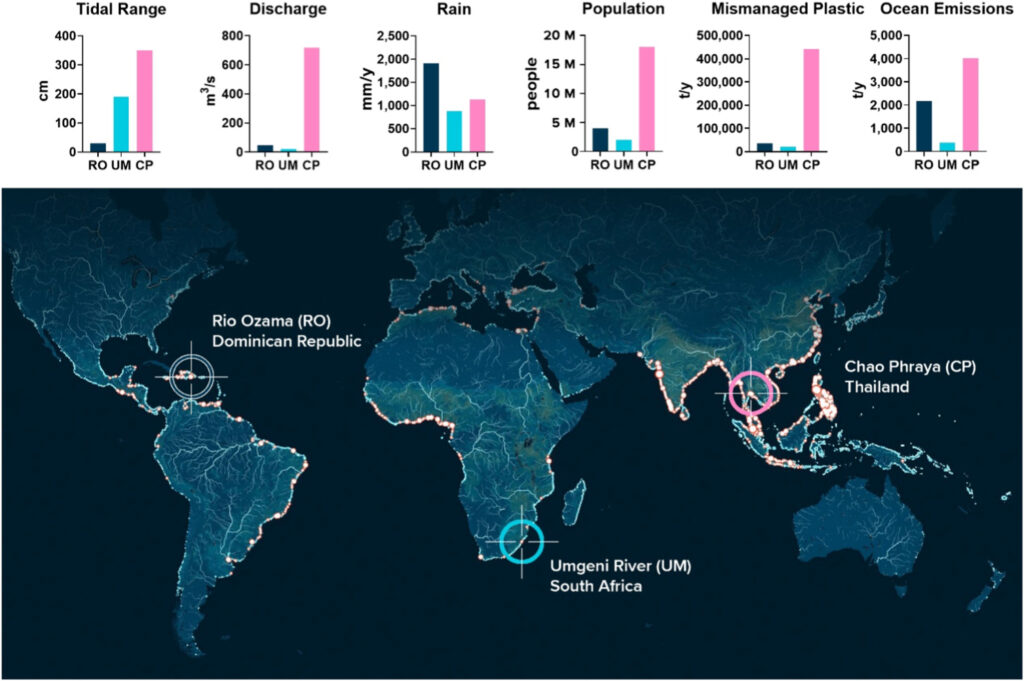
The research draws on observations and modelling across three rivers with very different hydrological and tidal characteristics: the Rio Ozama (Dominican Republic), Umgeni (South Africa) and Chao Phraya (Thailand).
In the three rivers investigated, 50% of the annual macroplastic transport occurred during just 7–12% of the year.
That means that modelling at a fine time resolution can help us understand what is happening during periods when it is difficult to monitor.
A more accurate picture of plastic transport
For organisations working to reduce plastic pollution, this study reinforces why high temporal resolution monitoring and modelling are essential for understanding and predicting macroplastic transport. Rather than relying solely on periodic monitoring or annual averages, organisations need a clearer understanding of how plastic transport varies over time. Identifying these peak transport periods can help direct monitoring efforts, optimise clean-up operations and support more effective pollution prevention strategies.
To better capture these transport dynamics, DHI further enhanced the DHI Global Hydrological Model (DHI-GHM) with a new tidal module. This is a great step forward for DHI-GHM’s representation of tidal rivers, and for macroplastic transport modelling, it enables better representation of the complex dynamics where plastic can be both transported downstream and pushed back upstream by tidal forces.
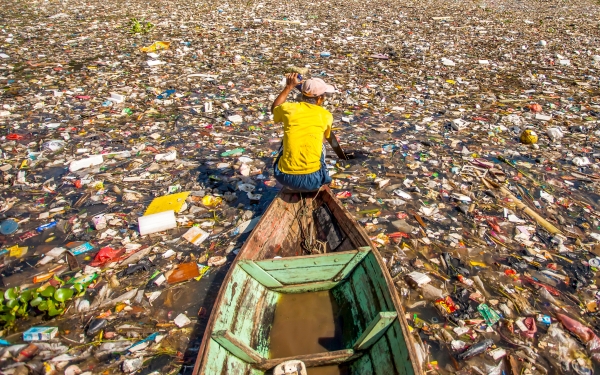
The research also showed that annual plastic emissions from the three rivers studied were significantly lower than previous global estimates, reinforcing the importance of using locally informed, process-based models that account for the unique characteristics of each river system.
Supporting better decisions on plastic pollution
For policymakers, engineers, NGOs and environmental organisations, better modelling provides greater confidence when deciding where to monitor, when to intervene and how to allocate resources.
As environmental challenges become increasingly complex, accurate modelling is essential for turning data into action. By enabling organisations to understand not just how much plastic moves through rivers, but when it moves, DHI can support more targeted monitoring, more effective interventions and better-informed decisions to reduce plastic pollution.
Interested in understanding plastic transport in your river system?
DHI applies advanced modelling to help organisations develop more effective monitoring programmes, assess pollution pathways and plan targeted interventions.
Contact us to discuss how DHI’s Global Hydrological Model and plastic transport expertise can support more accurate predictions and evidence-based environmental management.
Want to explore the research in more detail? Read the full study, ‘Three rivers to the test: Lessons for global plastic transport modelling’, published in Environmental Pollution.
Reach out to Alexandra Murray and Markus Svensson for more information about this study.